Provenance Is Not Authorship
Two AI-mediated works, two famous photographs, and the difference provenance cannot settle.

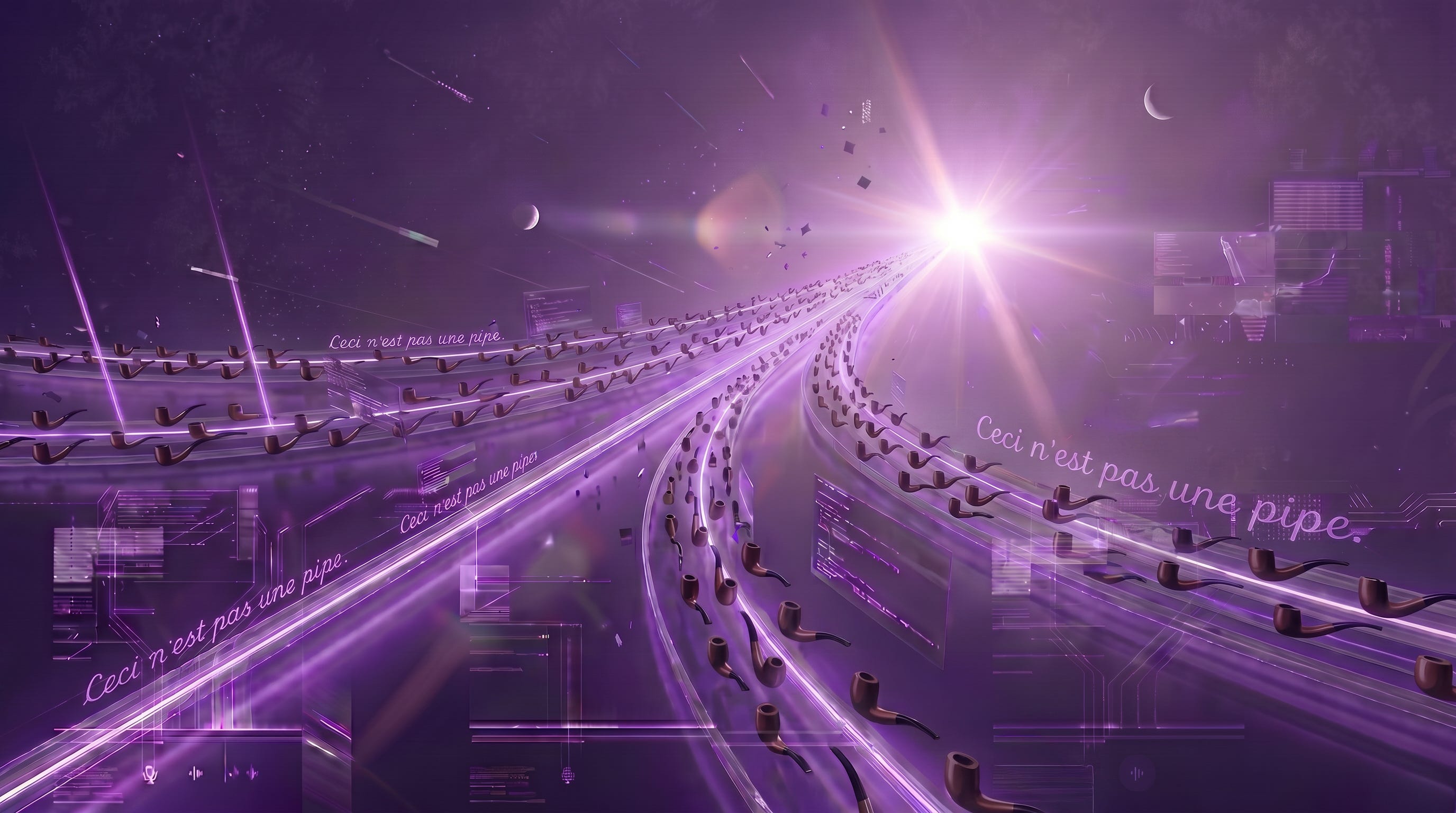
Two AI-mediated works collided with two famous photographs.
One took Ansel Adams’s Moonrise, Hernandez, New Mexico and produced an AI-generated color version, offered for sale at a photography fair. The Adams Trust objected.
The other took Steve McCurry’s Afghan Girl and turned the figure away from the camera. It was shown at Paris Photo as The Second Gaze, and discussed as a deliberate act of reinterpretation.
The facts are not identical, and they do not need to be. The useful thing is the contrast.
In both cases provenance mattered. In both cases a famous prior image was traceable. In both cases AI sat somewhere in the making. And in both cases the argument people were really having was not the one provenance could settle.
Provenance tells us where material came from. It does not, by itself, tell us who authored the new work. The two cases pull those apart, and a production system that means to govern AI-made images has to pull them apart too.
The one that drew objection
A dealer showed and offered for sale an AI-generated color version of Ansel Adams’s Moonrise, Hernandez, New Mexico — a 1941 photograph, one of the most reproduced images in American photography — at a major photography fair. The Adams Trust had not been asked, and when it learned of the work, it asked for it to come down.
The defense the dealer offered is the useful part. The prompt was the starting point, he said — a request for a realistic color version of the Adams image — after which came months of proofing, regenerating, and retouching, extensive human intervention before he would show or sell the result. He framed the work as transformative, resting on a claim that the source was in the public domain.
Read it as an authorship argument built on effort. Look how many decisions I made. Look how long I worked to get it right.
It does not fully answer the authorship question.
The public record shows effort, process, and a defense of transformation. What it does not show is an aim independent of Adams’s picture. The visible aim remains tethered to Moonrise: the valley, the moon, the light, the premise of seeing Adams’s image in color. The new labor is real. The issue is that the labor remains answerable to the inherited picture.
The one offered as reinterpretation
The other work has a name and a maker on the record. Bas Uterwijk, who works as Ganbrood, took Steve McCurry’s Afghan Girl — the 1985 National Geographic cover with its green eyes staring straight out — and turned the figure away from the camera. It was shown as The Second Gaze (2025) at the Heft Gallery booth at Paris Photo 2025.
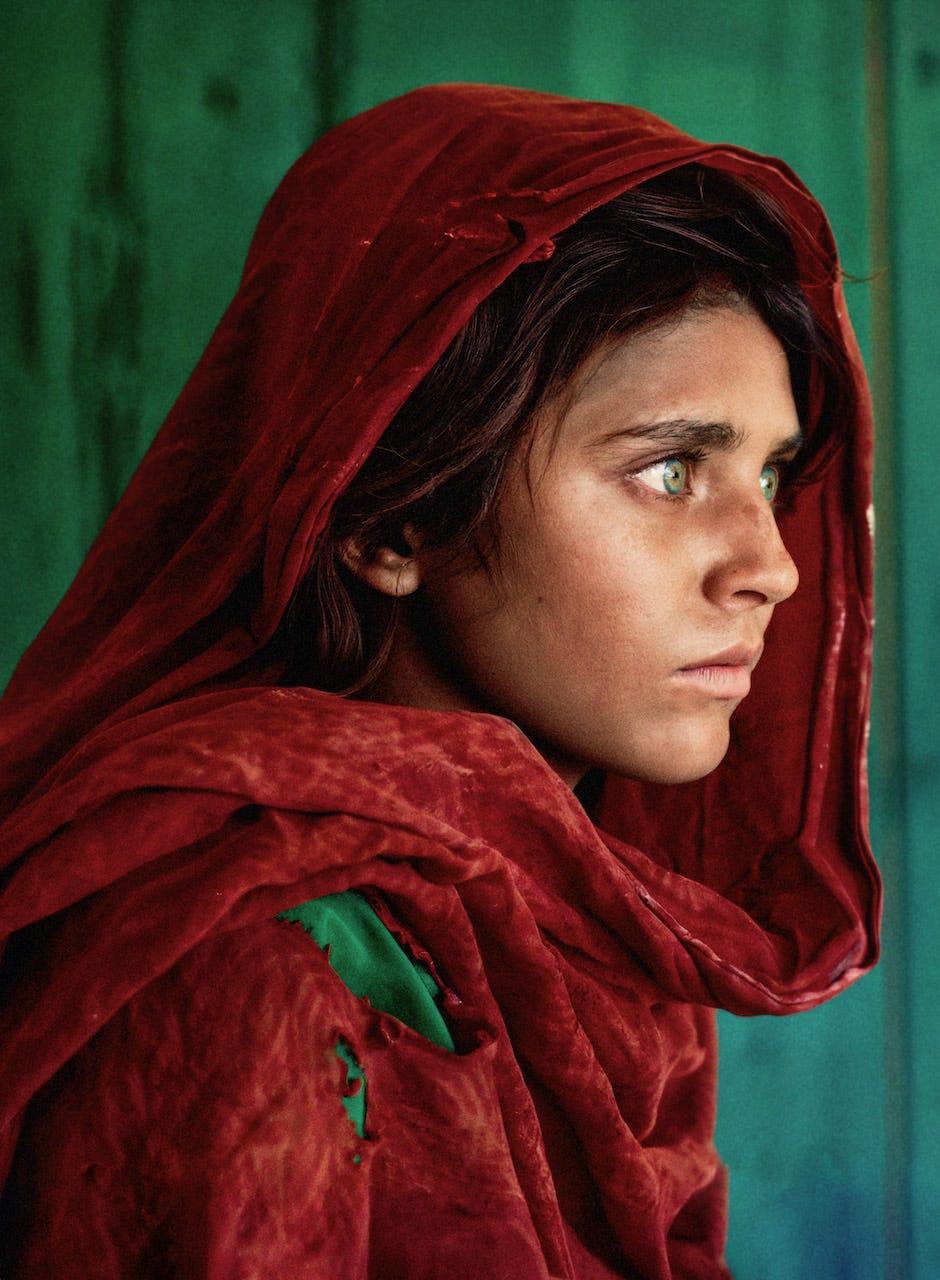
That is one decision, and it carries a whole new aim. The original asks you to meet her eye. The reinterpretation asks how a face becomes a symbol — how an image detaches from the person it depicts and goes on working without her. Writing in Right Click Save, the critic treated the work as a serious occasion to ask how AI alters art history, and gave Ganbrood room to state the intent himself: not a continuation of McCurry’s practice, but an invitation to consider how image-making is changing, with the attention on the forces that make an icon rather than on the people involved.
The model executed the move. It did not think of it. A person did, meant something specific by it, and bent the instrument to that meaning. Whatever else about the work is contestable, a new source of intent is locatable in it. That is what the Adams case does not clearly show on the public record.
The variable that differed
Strip the two cases down and the difference is not the things people reach for first.
Not real pixels versus fake ones. Both are AI-mediated. Not provenance. Both descend from prior famous photographs, and both descents are traceable. Not craft, where the Adams version, by its own dealer’s account, involved more visible labor: months of proofs, regenerations, and retouching. Not machine versus hand. Both sit inside the disputed family of AI-mediated image-making.
Both images involved a choice. Someone decided the desert should be seen in color. Someone decided the girl should turn away. Neither choice is nothing.
So the question is not which one added intention. Both did. The question is whose aim each intention serves.
The colorized Moonrise presents itself as Moonrise. It offers Adams’s photograph, now shown as it “really” looked. Its aim is borrowed: it stands in Adams’s place and answers to Adams’s picture. That is why the Trust’s objection has teeth. The work is not only using Adams’s image as source material. It is trying to occupy Adams’s chair.
The Second Gaze presents itself as The Second Gaze. It does not offer itself as Afghan Girl restored, completed, or improved. Turning the figure away from the camera is not McCurry’s aim carried further. It refuses the thing his photograph was built on: the frontal encounter, the returned gaze, the image becoming an icon through the viewer’s act of looking.
That work answers to its own standard, as a work by Ganbrood. Any objection to it would have to be a different kind of objection: not that it pretends to be McCurry’s photograph completed, but that it uses McCurry’s image as material.
So the difference was never color versus angle. It was whether the work supplies its own source of intent or borrows someone else’s aim. One authors under its own name and stands answerable for it. The other executes under a borrowed aim, which is a different thing, and the reason it drew a dispute.
Several grievances wearing one coat
The Adams case is easy to read as a single outrage. It is really three questions, and they come apart.
Did someone use Adams’s name and image without permission? That is a consent and licensing question, and the Trust’s grievance there is legitimate. Nothing in “provenance is not authorship” softens it, and none of it is meant to. A rights-holder does not have to accept their work run through a model and sold under their name, and saying the color version has no clear author does not hand anyone the right to make it.
Could a buyer be misled about what they were paying for? That is a question of disclosure and market confusion, and it stands on its own.
Who authored the color version? That is the authorship question, and the public record, at least as described, does not give a clean answer. It shows effort, process, and a defense of transformation. It does not show a new source of intent independent of Adams’s picture.
These have to stay separate because they have different remedies and different truths. Disclosure and provenance answer the first two. Neither answers the third. Notice, too, that the reinterpretation is not clean on every axis just because it is authored — building on another photographer’s picture carries its own consent questions. Authored and rights-troubled can be true at once. So can rights-clean and authorless. The axes do not move together, and reading one off the other is the mistake the whole episode is made of.
The backlash was never anti-AI
The detail that ends the “AI killed the craft” reading is what the Adams Trust actually objected to. Its statement was careful to say the problem was not the machine — Adams was prescient about, and excited by, what computers might do to photography. The objection was that his name, reputation, and most iconic image were used without authorization, and that no human artist was identified as responsible for the new work.
That grievance sits on the consent axis, not the technology axis. The fight here was never humans against machines. It was locatable authorship against a contested use of another author’s image — a distinction older than photography, wearing new clothes.
What provenance actually tells you
There is a line for this that predates every camera and every model. Ceci n’est pas une pipe.
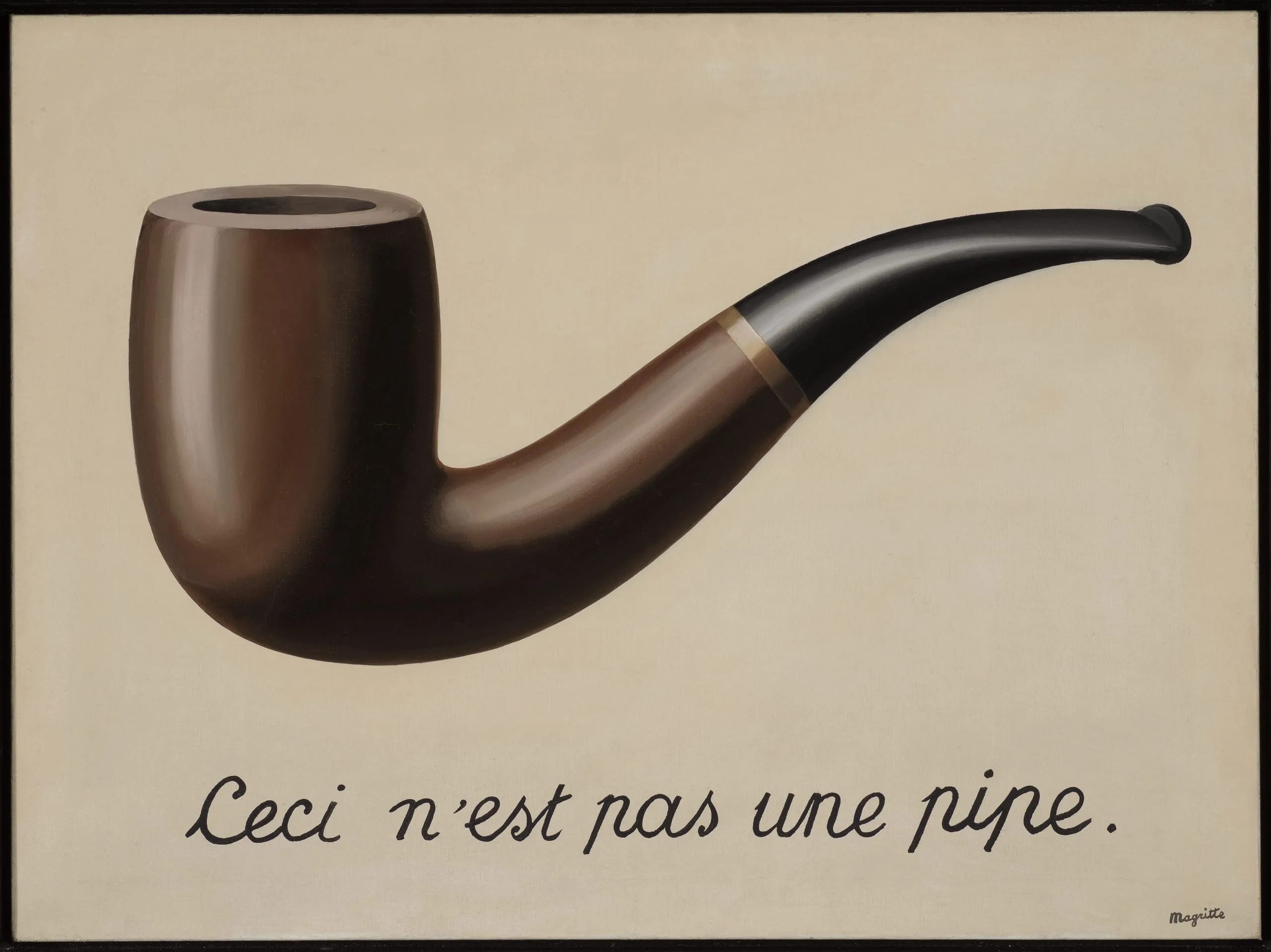
The image is not the thing, and a label saying how an image was made — shot on film, scanned, generated, retouched — tells you the process and not much else. It does not tell you whether the image is true, and it does not tell you who authored it.
This is not a case against provenance. Provenance is necessary, and AI makes it more necessary, not less. The documentary tie a straight photograph carries — light from a real scene reaching a surface — is provenance, and it is the difference between an image that can witness something and one that cannot. Consent and licensing live on the provenance layer too. Who owned the source, who authorized the use, who is depicted and whether they agreed. A world that cannot trace its images cannot answer any of that, and all of it matters.
In art history, provenance already means more than fabrication. It can carry ownership history, attribution, exhibition context, and a work’s place in an artist’s body of work. That older, richer sense is exactly why the word becomes unstable in AI-image discourse: a fabrication record borrows the authority of provenance while answering only part of the question.
Better to separate the terms.
Provenance is where the image comes from: what source files or prompts touched it, what tool produced it, what edits followed, what metadata traveled with it, what permissions or custody attach to it. That record matters. It can answer questions about consent, licensing, custody, process, and technical truth.
Intent is the meaning and purpose behind the image: what it is for, what it is meant to say, and what standard it answers to.
Authorship is whose aim governs the work, who selected this result against alternatives, what standard governed the choice, and who is answerable for it.
Those records can travel together. They often do. But a fabrication record can be complete and still leave the authorship question unanswered.
What provenance cannot do is settle authorship or truth. A traceable, real-pixel photograph can still make a false claim. A composite can have impeccable fabrication provenance and still mislead about what happened. An openly synthetic image can have no photographic capture at all and still carry a clear authorship record: who set the aim, what the image was for, and who stands behind it. Which way an image points and how it was made are different questions, and origin data answers only the second.
Conceptual art proved the inverse decades ago. An artist can originate a work and make none of its marks — write the instruction, hand it to a fabricator, and the authorship stays legible in the aim and the close. Execution labor turns out to be neither necessary for authorship, in the artist who touched nothing, nor sufficient for it, in the refiner who touched everything. The marks are not where the authorship lives.
The courts drew the line, then redrew it
Copyright law has had to draw a neighboring line in appropriation art, and the line runs close to the same distinction.
When Richard Prince reworked Patrick Cariou’s photographs of Jamaican Rastafarians into his Canal Zone works, Cariou sued. In 2013 the Second Circuit held that most of Prince’s works were fair use. Not because Prince’s hand had made the source photographs new, and not because the law required him to comment on Cariou — the court rejected that requirement. It looked instead to how the works could reasonably be perceived.
That is not an authorship ruling. It is a copyright ruling about use. But notice what the law refused to treat as decisive: the hand, the hours, even the artist’s private explanation. The later work had to carry something new in the work itself, something a viewer could perceive as a different expression, purpose, or meaning.
The same law also refuses the opposite shortcut. Copy a specific image for sale and rely only on the fact that an artist meant something by doing it, and that may not save you. Jeff Koons lost that version of the argument in Rogers v. Koons. The Supreme Court narrowed the more generous reading in Warhol v. Goldsmith, holding that new expression or meaning is not enough by itself when the specific commercial use shares substantially the same purpose as the source.
So the law is not saying what artists sometimes want it to say. It is not saying that provenance does not matter. It is not saying that permission does not matter. It is not saying that an exact copy becomes free because an artist selected it.
It is saying something more useful for this piece. Lineage and authorship are not the same axis. A work can carry a new perceptible aim and still be rights-troubled. A use can be barred even if the later work is artistically serious. Consent, market substitution, transformation, and authorship travel together often enough to confuse us, but they do not collapse into one question.
Why a production system should care
This is not only an art-fair argument. It is a warning about what a generative pipeline chooses to record.
The instinct, once images are cheap and synthetic, is to govern provenance. Stamp every asset with how it was made — which pixels are model-generated, which are camera-original, which were retouched. Worth doing. But it is the wrong center of gravity, and the two photographs show why.
A provenance stamp would have flagged both works as AI-built and said nothing about the question the dispute actually turned on, whether a new source of intent was present. A system that records only the fabrication provenance and stops there is governing the wrong layer.
The thing worth recording is the thing the dispute turned on. What this asset was for. Who set that aim. Who selected this result against the alternatives, on whose authority, against whose standard, answerable to whom.
That is not fabrication provenance. It is an authorship record. And it is exactly what a fabrication stamp leaves out.
It is the same shape the earlier pieces kept finding. A model has enormous capacity and no production intent. A reference carries everything and instructs nothing until a role is assigned. The labor a tool removes was never the whole of the craft. Each separates something that looks like authorship from authorship itself. Provenance is the latest and the most convincing, because it is genuine evidence and we are right to want more of it.
The rule
Carry the provenance. All of it — where the material came from, what touched it, what the causal tie to the world is or is not, whose permissions are attached. A serious pipeline has to answer those, in a form that survives the tools changing underneath it.
But do not mistake the trace for the author. The questions provenance answers are necessary and they are not the authorship question. Who authored this, against whose standard, answerable to whom, still lives where it always lived — in the governed chain, not the lineage.
A pipeline can know exactly how every image was generated and still not say who authored any of it. The two photographs only made the gap visible in public.
The tool did not decide. Someone did. In the Adams case, the public defense points toward fidelity: a new technical execution of an inherited aim. In The Second Gaze, the work points toward a different aim, governed by a different standard.
Provenance can tell you what the image descended from.
It cannot, by itself, tell you whose aim governs the result.
/// /// /// ASK
repo https://github.com/apexSolarKiss/asset-pipeline-ASK
prior pieces >>
related ASK-system studies >>
sources >>